Content writer-Mayer Finley
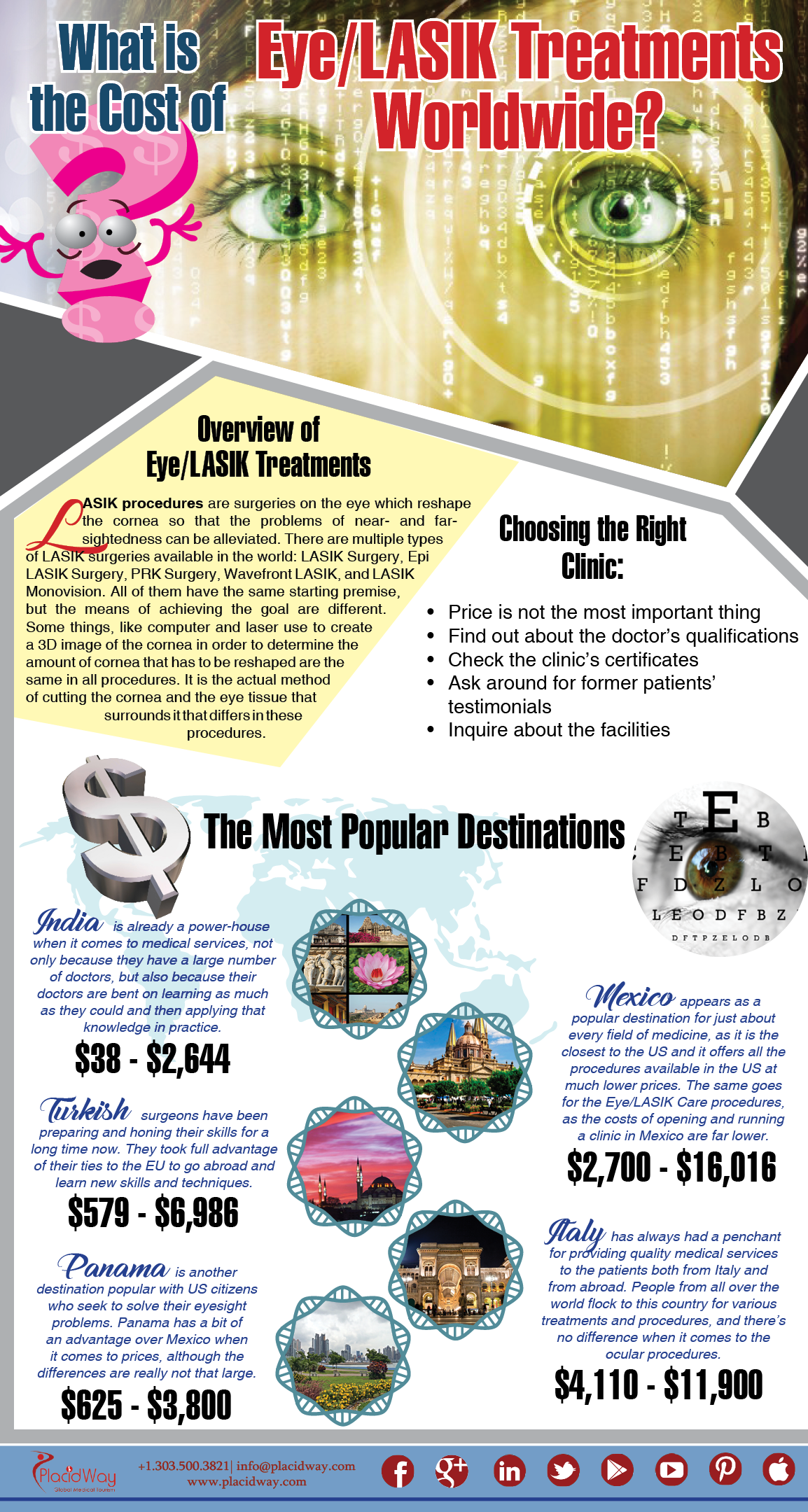
Many individuals who don't get approved for LASIK eye surgery want to know even more regarding the procedure so they can discover choices. The most effective option relies on the certain attributes of your eyes.
LASIK and PRK both use an excimer laser to improve the cornea. The distinction is that with LASIK, the cosmetic surgeon develops a flap on the top layer of your cornea. With PRK, no flap is developed.
1. Phakic Intraocular Lens Implants
Phakic Intraocular Lens Implants (pIOL) involve the implantation of an artificial intraocular lens without removal of your eye's natural lens. This permits you to continue to use your eye's natural lens for accommodation. Your doctor will make use of numbing eye drops and also perhaps a light sedative for convenience throughout this short treatment.
Throughout pIOL surgery, your cosmetic surgeon creates a flap in the corneal epithelium to expose the stroma. Laser sitting keratomileusis (LASIK) or a mechanical, epi-LASIK strategy is then utilized to change the corneal form and also get rid of cells.
While phakic IOLs are a reliable treatment for myopia, they do not create the very same long-lasting refractive security and ideal spectacle-corrected visual acuity results as laser vision modification. Additionally, phakic IOLs can be related to issues such as loss of holiday accommodation as well as enhanced level of sensitivity to glare. It is essential to discuss these problems with your doctor. She or he can present choices that might function better for your situations.
2. PRK
PRK is a really comparable treatment to LASIK, yet it supplies advantages to specific individuals who are not good candidates for LASIK as a result of slim corneas. It also supplies a more secure option for people who experience issues after LASIK. This kind of surgery is a wonderful treatment for those with refractive mistakes, and also it can considerably boost vision. Nonetheless, there are uncommon long-term negative effects, such as wearing away night vision and permanent corneal haze.
Throughout PRK, the doctor utilizes topical anesthesia to numb the eyes before positioning a speculum over them to prevent blinking. The external layer of epithelial cells is gotten rid of either mechanically (using a special brush or sweeping device), with an alcohol option, or by computer-controlled laser pulses. The excimer laser then reshapes the cornea to remedy the refractive mistake. As soon as the surgical procedure is total, the person will wear a special bandage lens to assist the eye recover effectively. Instantly after the surgical procedure, your vision may be blurred or hazy as well as it is important to follow your doctor's post-operative directions very carefully.
3. IOL Implants
IOL Implants are artificial lenses operatively placed inside your eye to change your all-natural lens. They are offered in a number of various versions including monofocal as well as multifocal designs that give you a range of vision improvement at both distance as well as near. Unlike hair transplanted body organs, IOL's are completely man-made and thus have the advantage of not being at risk to being rejected.
Like LASIK, IOL surgery changes the form of your cornea to boost how light hits the rear of your retina. This makes it easier to see close-up objects without the requirement for eyeglasses or call lenses. Retinal Detachment are monofocal and supply clear vision for one prime focus, either far for driving and TV viewing or near (for analysis). The newer accommodative IOLs, such as the Crystalens, can lower your dependence on reading glasses for a lot of points by including an integrated capacity to focus at multiple distances. Nonetheless, more than 80% of people dental implanted with accommodative IOLs in FDA professional tests still called for glasses for some range and near jobs.
4. RLE
RLE, also referred to as lens replacement surgical procedure, is one more alternative that's worth checking out if you wish to lower your dependence on contact lenses and glasses. visit the following website page works in a similar means to LASIK, however rather than re-shaping the all-natural product of your eye, it entirely removes it and also changes it with a synthetic intraocular lens. https://writeablog.net/clark646rachal/post-op-care-tips-for-a-smooth-recuperation-after-refractive-surgical-procedure can pick from a variety of various IOLs, including monofocal, multifocal, as well as prolonged depth of emphasis.
This option to LASIK is ideal for individuals with high refractive errors who aren't great candidates for laser vision modification. Nonetheless, it doesn't deal with presbyopia in addition to LASIK, and also the procedure can often cause troubles that can lead to irreversible severe loss of vision. These troubles consist of flap problems, dry eyes, and vision regression. Your medical professional will certainly review the dangers of RLE with you before recommending it as a treatment option.